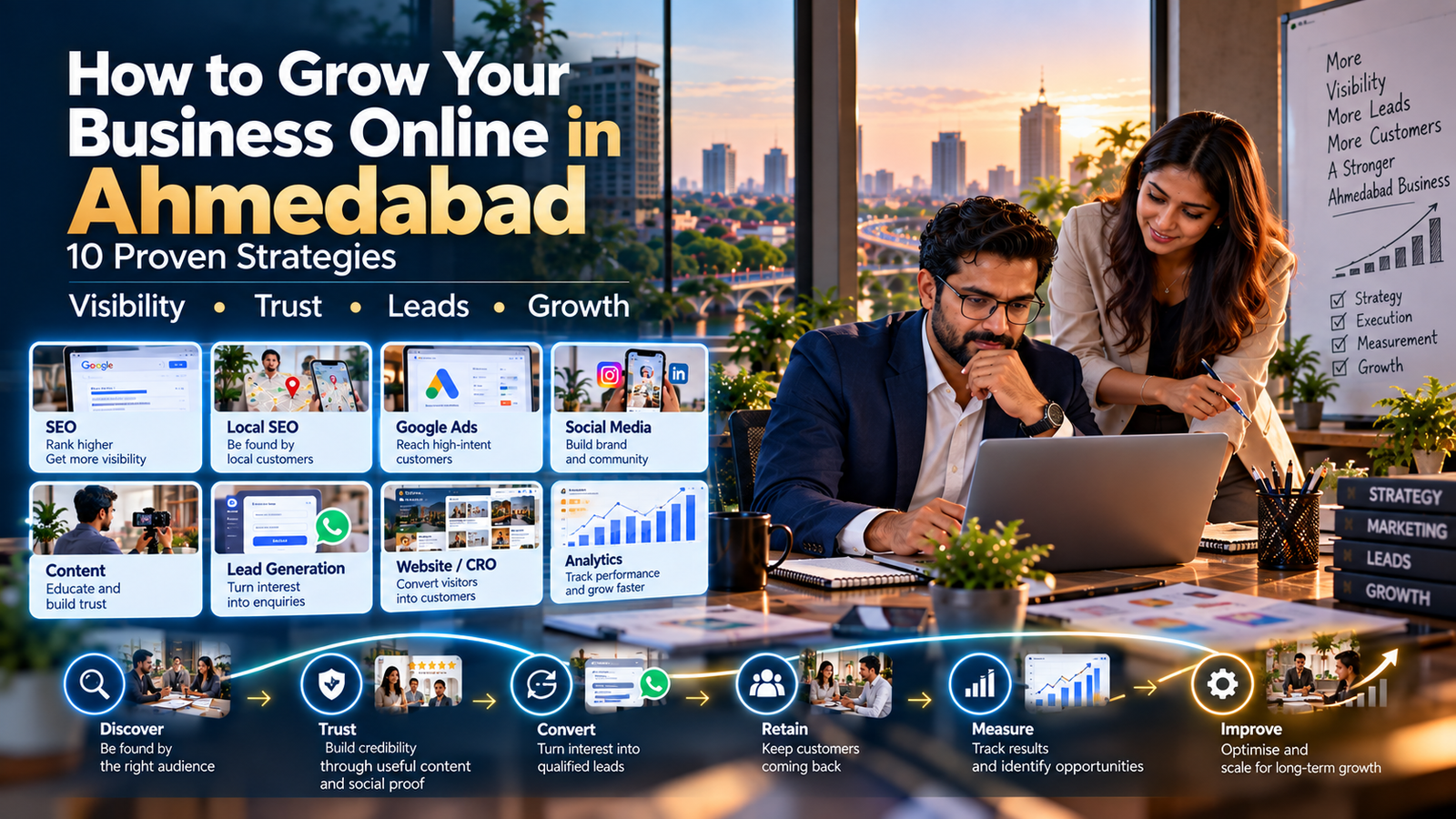
10 Proven Digital Marketing Strategies for Builders
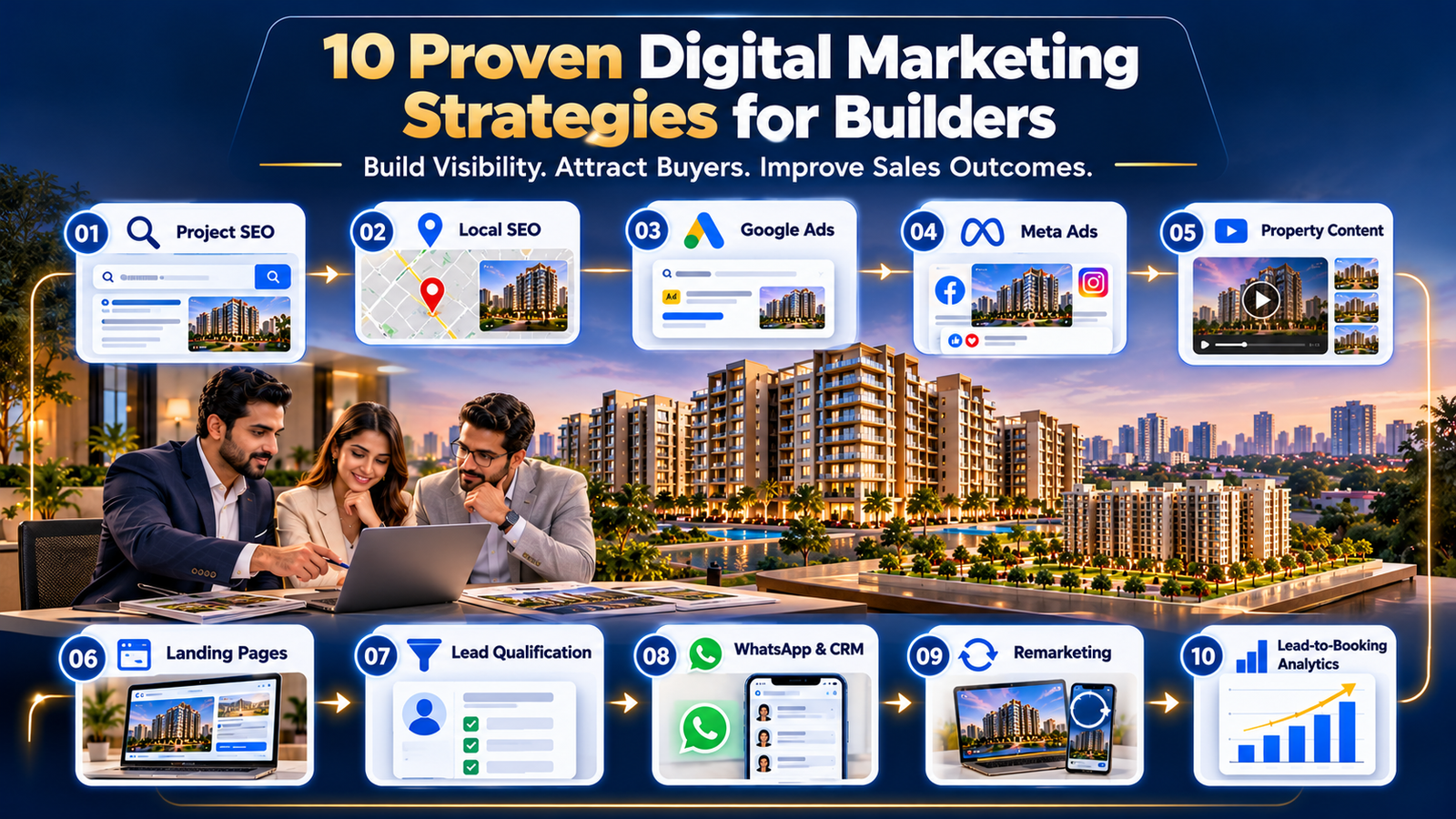 Digital Marketing for Builders in Ahmedabad
1. Build a Project-Specific SEO Strategy
SEO helps builders attract people who are actively researching properties through search engines. Unlike advertising, organic visibility can continue generating visits after individual campaigns end.
However, real estate SEO requires more than adding keywords to a homepage.
Each project should have a dedicated, informative page that answers the questions potential buyers are likely to ask.
Target relevant searches such as:
- New residential projects in Ahmedabad
- 2 BHK flats in Ahmedabad
- 3 BHK flats in Ahmedabad
- Luxury apartments in Ahmedabad
- Under-construction residential projects
- Commercial properties in Ahmedabad
- New launch projects in relevant localities
A consistent optimisation process can help builders improve project-page relevance, strengthen organic visibility and attract buyers researching properties online.
Explore our
SEO services in Ahmedabad to learn how technical improvements, content optimisation and search-intent targeting can support long-term organic growth.
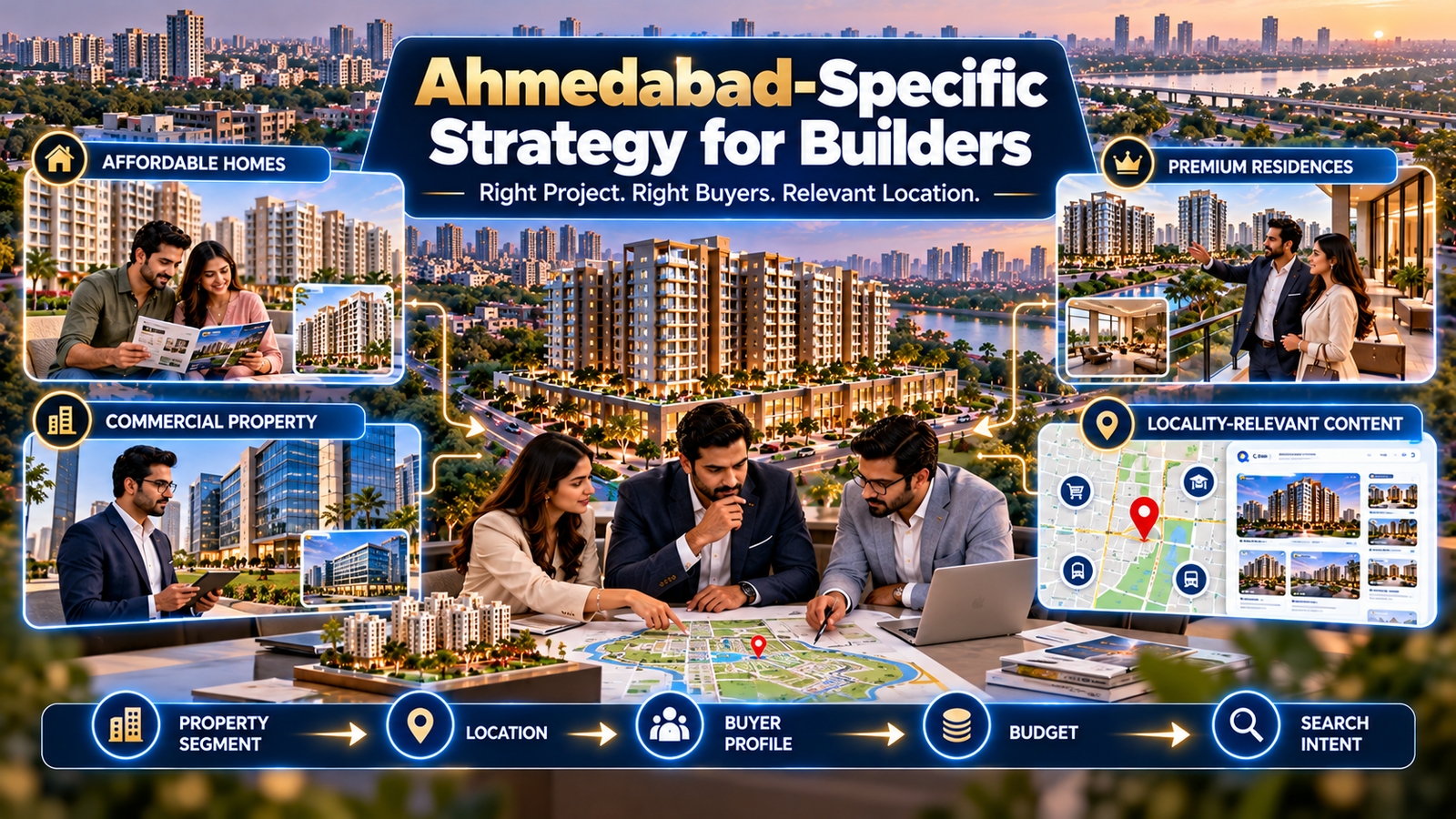
Choose keywords according to the actual project, its location and its target audience. Avoid targeting a premium project with content designed for budget housing buyers.
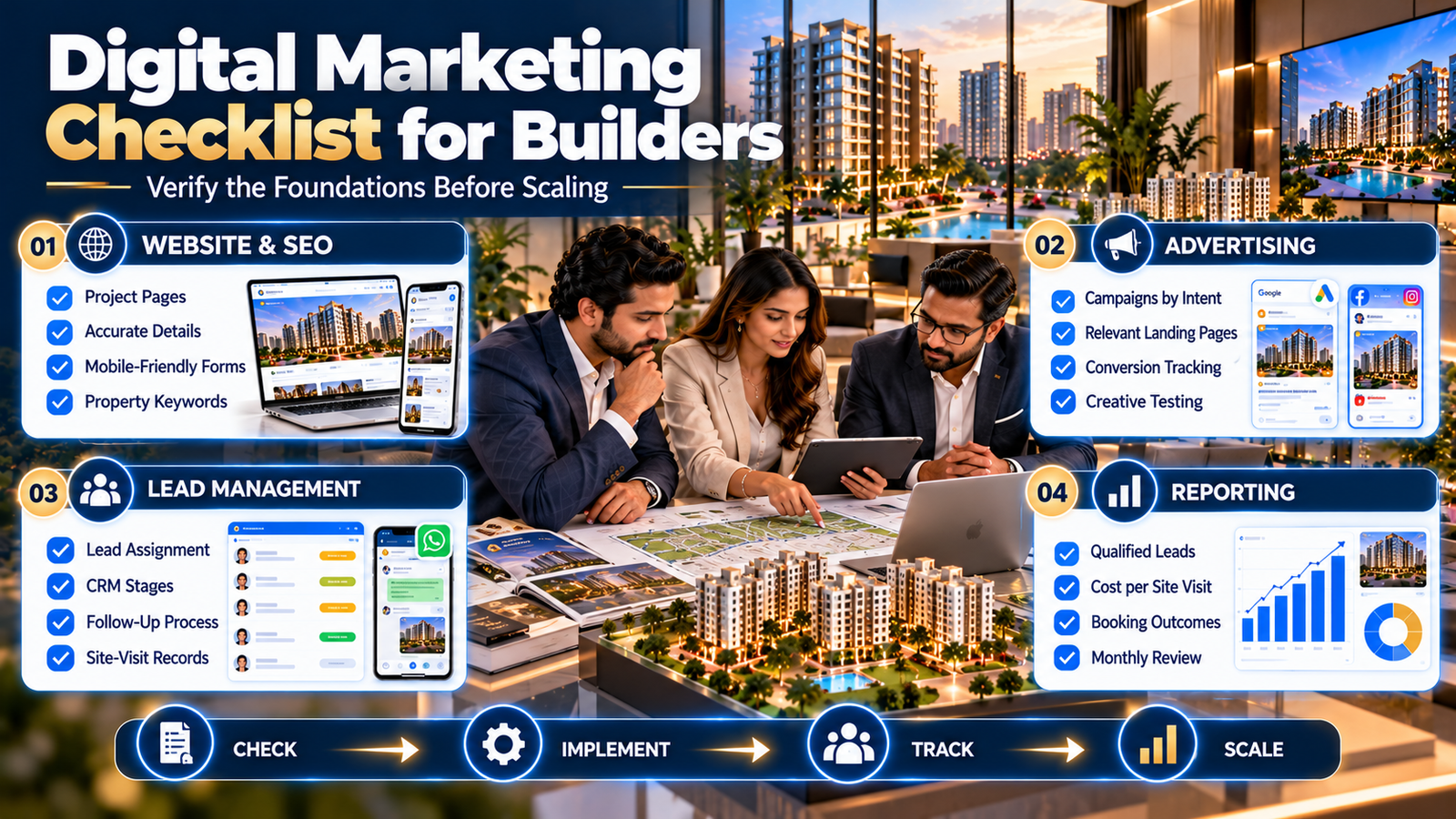
What should a project page include?- Project name and location
- Available configurations
- Price information or enquiry options
- Amenities and specifications
- Floor plans and photographs
- Construction and possession information
- Nearby landmarks and connectivity
- Relevant approvals and RERA details, where applicable
- Frequently asked questions
- Call, WhatsApp and site visit options
Use accurate, updated information. Do not publish unverified prices, availability or possession dates to attract search traffic.
Also, create supporting content around home-buying questions and locality research. This helps your website address buyers at different stages of their decision-making journey.
2. Strengthen Local SEO and Google Business Profile
Local SEO helps your business become more discoverable when people search for relevant developers or property services in a particular area.
For builders with an eligible business presence, Google Business Profile can support visibility on Google Search and Maps.
Start by maintaining accurate business information, selecting relevant categories and adding genuine photographs of your office, team and projects where appropriate.
Your local SEO checklist should include:
- Accurate business name, address and phone number
- Complete business information and contact details
- Relevant services and business categories
- Genuine customer reviews and professional responses
- Consistent business information across directories
- Useful local content on your website
- Links between your business profile and relevant website pages
Create locality-focused website content only when it provides genuine value. For example, a page about a project near SG Highway should explain its actual connectivity, nearby facilities and location advantages.
Do not create dozens of nearly identical pages by replacing one locality name with another.
Important: A project and a developer's business profile serve different purposes. Follow Google's eligibility rules and represent each business or location accurately.
3. Use Google Ads to Capture High-Intent Property Buyers
Google Ads can help builders reach potential buyers who are already searching for properties or projects.
This is particularly useful when a project has a launch deadline, available inventory or a defined sales target.
For example, someone searching for a specific configuration in Ahmedabad may be closer to making a purchase decision than someone casually browsing real estate content.
Recommended campaign structure:
| Campaign | Target Intent |
|---|
| Project-specific | Searches for the project or developer |
| Property configuration | 2 BHK, 3 BHK or luxury homes |
| Location-based | Searches related to the project's area |
| Commercial property | Office, retail or commercial space |
| Brand campaign | Relevant searches for the builder's name |
| Remarketing | Eligible audiences who previously engaged |
Builders can structure paid search campaigns around relevant property searches, project locations, budgets and site-visit enquiries.
Keep campaigns and landing pages aligned. An advertisement for a 3 BHK project should take users directly to that project's page, not force them to navigate from the homepage.
Review search terms regularly and exclude irrelevant queries. Someone searching for property jobs, construction materials or free floor-plan downloads may not be a suitable sales lead.
Measure conversion quality, not just clicks. A campaign generating fewer but more qualified enquiries may deliver better commercial value than one producing many irrelevant submissions.
4. Use Meta Ads to Create Project Awareness
Google Ads captures existing search demand. Meta Ads on Facebook and Instagram can introduce a project to people who may not be actively searching yet.
This makes social advertising useful for new launches, project awareness, visual storytelling and lead generation.
Start by defining the buyer profile. Consider the property category, location, budget, likely requirements and the information a buyer needs before enquiring.
Creative formats worth testing include:
- Project walkthrough videos
- Short property Reels
- Floor-plan explainers
- Amenity highlights
- Construction progress updates
- Location and connectivity videos
- Builder or architect introductions
- Genuine customer testimonials
Each creative should communicate one clear benefit.
For example, a short video could explain the layout of a 3 BHK apartment. Another could demonstrate the project's access to nearby roads or facilities, provided the claims are accurate.
Test different creative approaches and audiences. Don't assume that a high number of video views means strong buying intent.
Where lead forms are used, ask enough questions to understand the prospect's needs without making the form unnecessarily difficult to complete.
5. Create Property Content That Builds Trust
Property buyers often need more information before contacting a builder. Useful content helps them evaluate a project and understand the developer's offering.
Instead of posting only promotional messages, answer common buyer questions.
Content ideas for builders:
- How to choose a residential project
- Questions to ask before booking a flat
- Ready-to-move versus under-construction properties
- How to compare two apartment configurations
- What buyers should check during a site visit
- Understanding project amenities and specifications
- Locality guides for relevant Ahmedabad areas
- Construction progress and project updates
You can distribute this content through blogs, social media, videos, email and WhatsApp when the recipient has consented to receive marketing messages.
A useful content plan covers three areas:
- Project information: configurations, amenities, specifications and location.
- Buyer education: buying considerations, comparisons and common questions.
- Trust and proof: genuine reviews, construction updates and verified project information.
This approach gives buyers reasons to engage beyond a single advertisement.
6. Build Landing Pages That Convert Visitors Into Enquiries
Even a well-targeted campaign can underperform when its landing page is confusing or incomplete.
A property landing page should make it easy for buyers to review project details and enquire without confusion.
Effective
website design and development can support this journey through mobile-friendly layouts, clear calls to action, accessible forms and a smoother enquiry experience.
A builder's landing page should make the project's key information easy to find and the next step easy to take.
Include these essential elements:
- A clear project headline
- Location and property configuration
- Accurate pricing information or a clear enquiry option
- High-quality project photographs
- Floor plans and amenity details
- Relevant trust signals
- A short enquiry form
- Click-to-call and WhatsApp options
- A clear site visit CTA
For example, use “Request Project Details” or “Book a Site Visit” instead of a vague button such as “Submit.”
Keep forms simple. Ask for essential information such as name, phone number, preferred configuration and budget range when relevant.
Make the page mobile-friendly and test it on actual devices. Check that forms work, phone links open correctly and WhatsApp messages reach the intended business.
Trust matters as much as design. Publish genuine project details and avoid unsupported claims about returns, availability or future property prices.
7. Build a Lead Qualification and Follow-Up System
Not every enquiry represents an immediate buyer.
Some prospects are ready for a site visit, while others are researching prices or comparing projects.
Builders need a process that distinguishes between these groups.
A practical lead qualification framework includes:
- Preferred property type
- Budget range
- Preferred location
- Purchase timeline
- Self-use or investment purpose
- Interest in a site visit
Use the information to prioritise follow-up, not to make unsupported assumptions about a person's financial position.
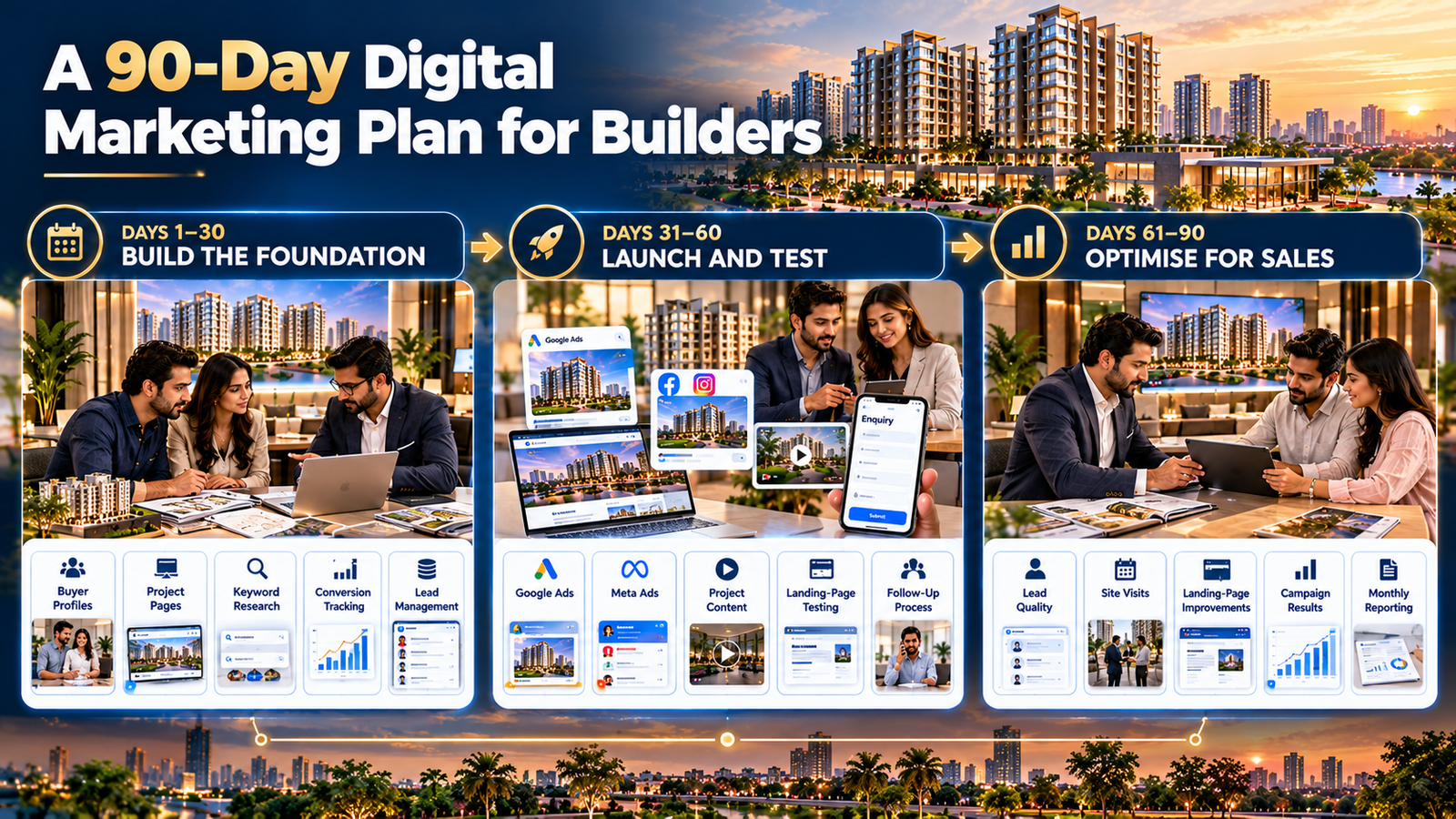
Connect website forms and advertising leads to a CRM or another organised lead-management system.
A simple pipeline could be:
New Lead → Contacted → Qualified → Site Visit Scheduled → Site Visit Completed → Negotiation → Booked / Lost
Record the outcome of each stage. If a lead is unsuitable, document the reason where appropriate.
This information helps marketing teams understand which campaigns produce useful sales opportunities.
8. Use WhatsApp and CRM for Consistent Lead Nurturing
Many property buyers need several conversations before deciding whether to visit a project.
They may request a brochure, compare floor plans, ask about amenities or need time to discuss the purchase with family.
A structured follow-up process helps keep the conversation useful and relevant.
Example follow-up sequence:
| Timing | Suggested Communication |
|---|
| After enquiry | Acknowledge the enquiry and share requested details |
| After initial contact | Answer the buyer's specific questions |
| Following days | Share relevant plans, photographs or location information |
| Before a visit | Confirm appointment details |
| After a visit | Ask for feedback and respond to outstanding questions |
Adjust the sequence to the buyer's preferences and actual interactions. Avoid sending repeated messages when someone has declined further communication.
WhatsApp can make conversations convenient, but it should not replace proper lead records. Store important details and follow-up commitments in your CRM.
The sales team should also have a clear process for assigning new enquiries and handling unanswered calls.
9. Use Remarketing to Re-engage Interested Buyers
Some visitors will leave a project page without submitting an enquiry. They may return later after comparing alternatives or discussing the purchase with family.
Remarketing can help bring eligible previous visitors back into the buying journey.
Depending on platform policies, consent requirements and available audience data, you may be able to reach people who previously engaged with your website or advertising.
Relevant remarketing messages could include:
- Explore the project floor plans
- View the location and amenities
- Learn about available configurations
- Request updated project information
- Schedule a property visit
Keep the message relevant to the content the audience previously viewed.
Avoid misleading urgency, fabricated scarcity or claims that cannot be verified. Respect advertising-platform rules and applicable privacy requirements.
Remarketing should support an informed decision rather than pressure a buyer into making one.
10. Track Marketing Performance From Lead to Booking
Builders should evaluate marketing using business outcomes, not vanity metrics alone.
A campaign may generate many enquiries but very few site visits. Another may generate fewer leads that are better matched to the project.
Without proper tracking, it is difficult to identify the difference.
| Metric | What It Helps Measure |
|---|
| Impressions and clicks | Advertising reach and engagement |
| Landing-page conversion rate | How effectively visitors enquire |
| Cost per lead | Cost of generating an enquiry |
| Qualified lead rate | Relevance of enquiries |
| Site visit rate | Progress toward an in-person visit |
| Cost per site visit | Acquisition cost at a stronger intent stage |
| Booking rate | Movement toward sales |
| Cost per booking | Marketing cost associated with bookings |
| Revenue and ROI | Commercial performance |
Use Google Analytics, Google Ads conversion tracking, Google Search Console and CRM reporting where relevant.
Set up tracking carefully. Test forms, calls and WhatsApp click events, and distinguish a button click from a confirmed enquiry.
For better reporting, connect lead outcomes back to their original marketing source wherever practical.
This creates a feedback loop: marketing generates leads, sales records their quality, and the team uses the results to improve targeting and spending.

 Digital Marketing for Real Estate in Ahmedabad: 10 Proven Strategies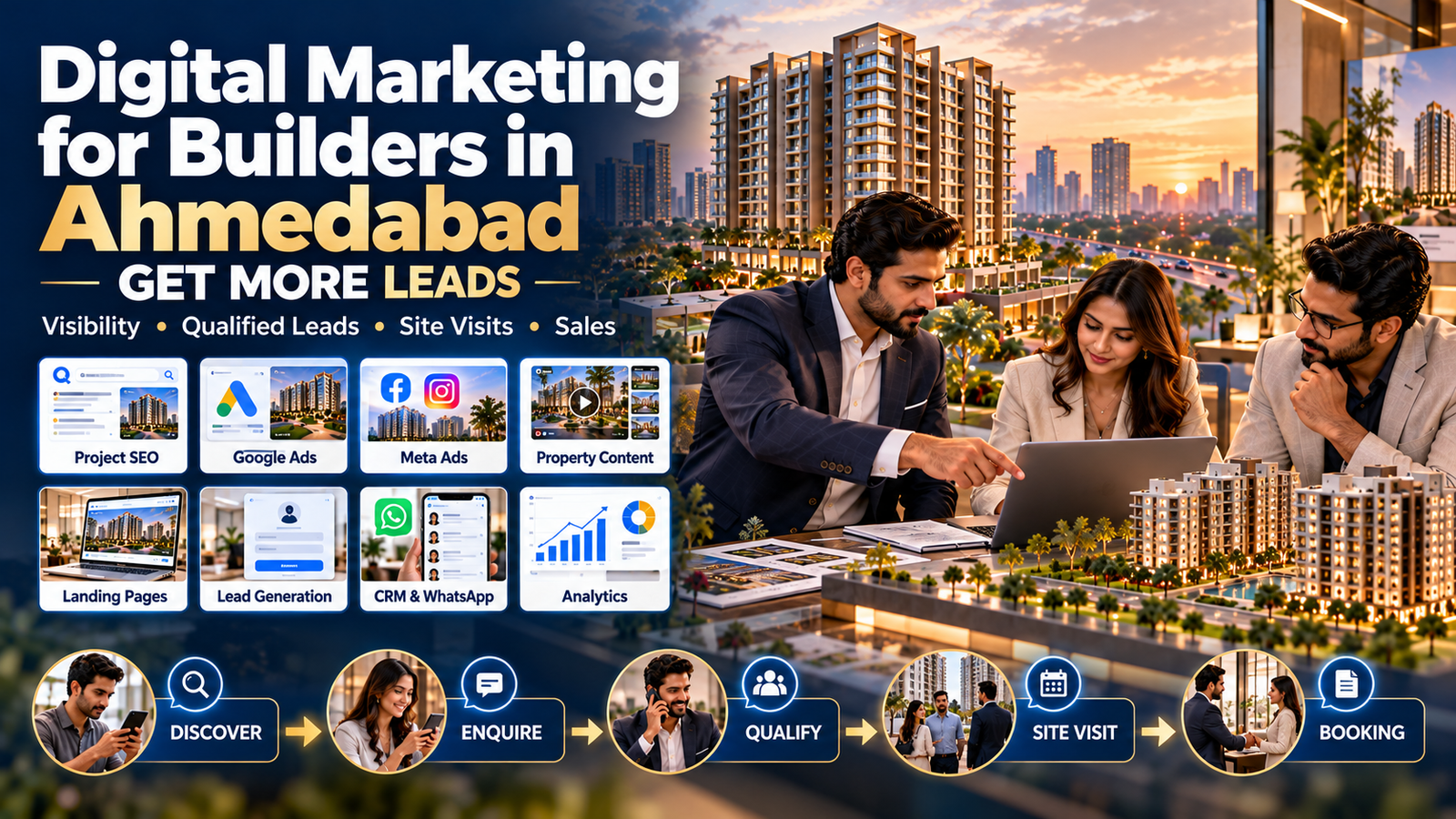



 How to Grow Your Business Online in Ahmedabad: 10 Proven Strategies
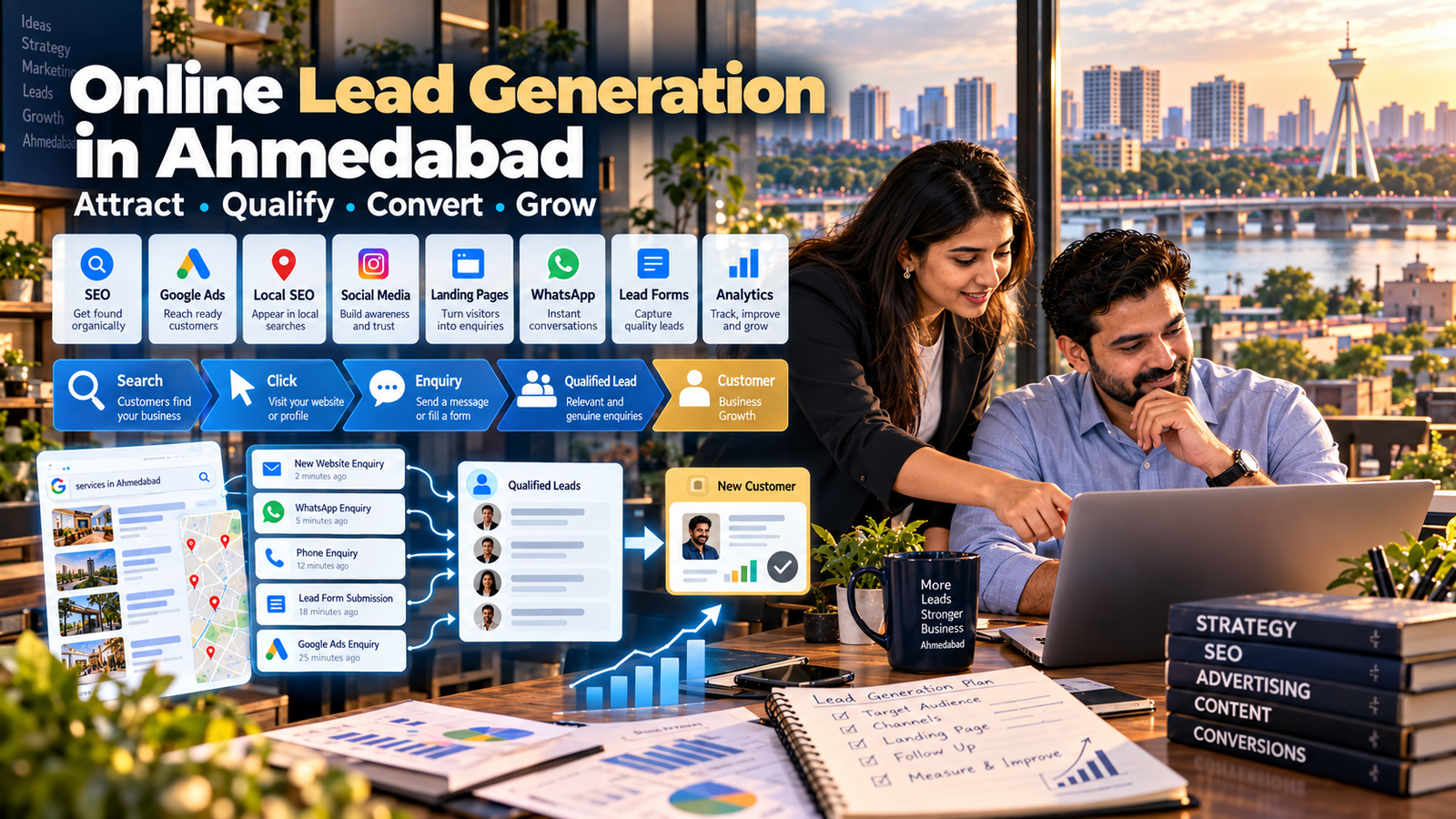 Online Lead Generation for Ahmedabad Businesses: 10 Proven Strategies
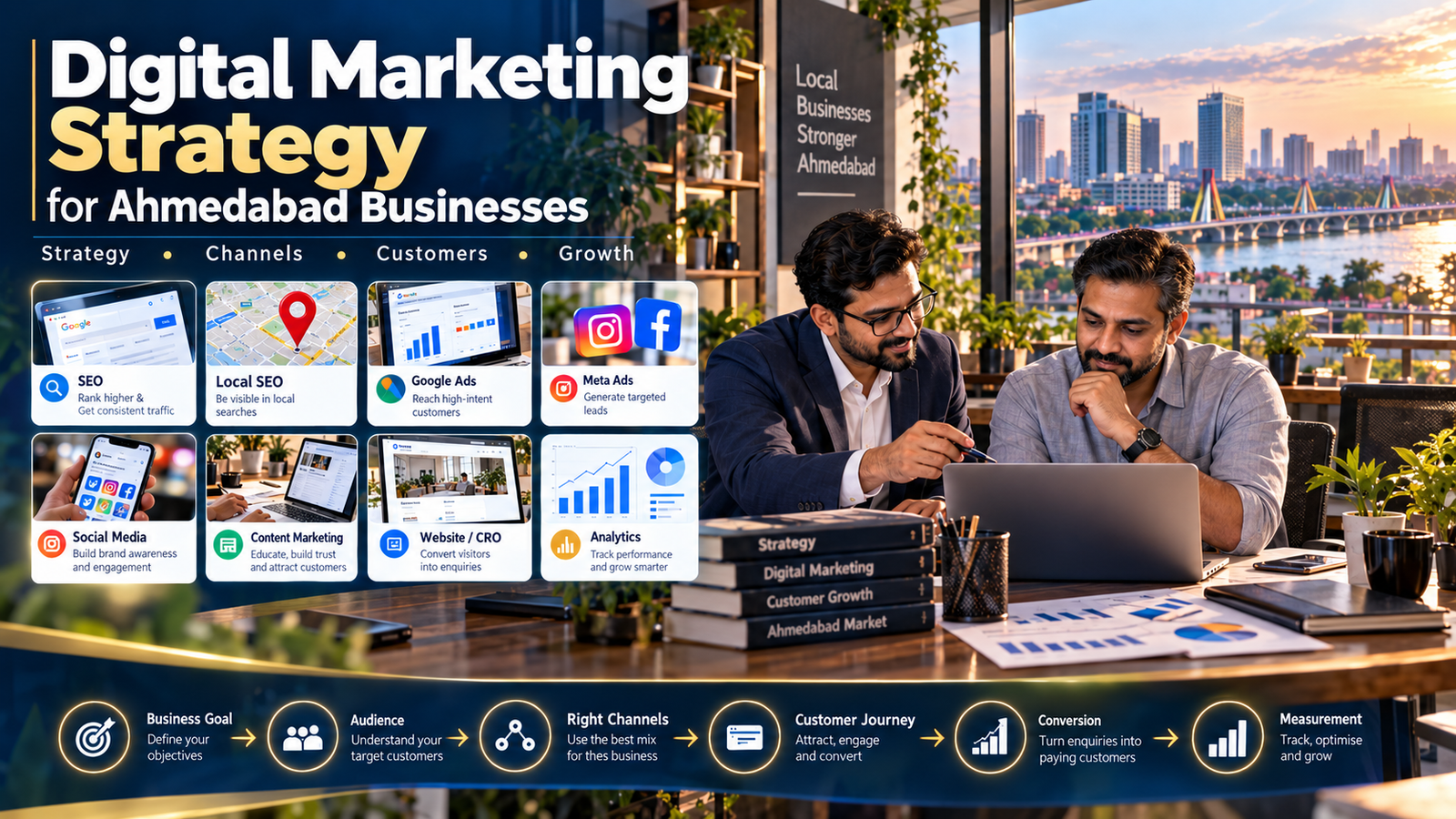 Digital Marketing Strategy for Ahmedabad Businesses: 10 Proven Strategies