
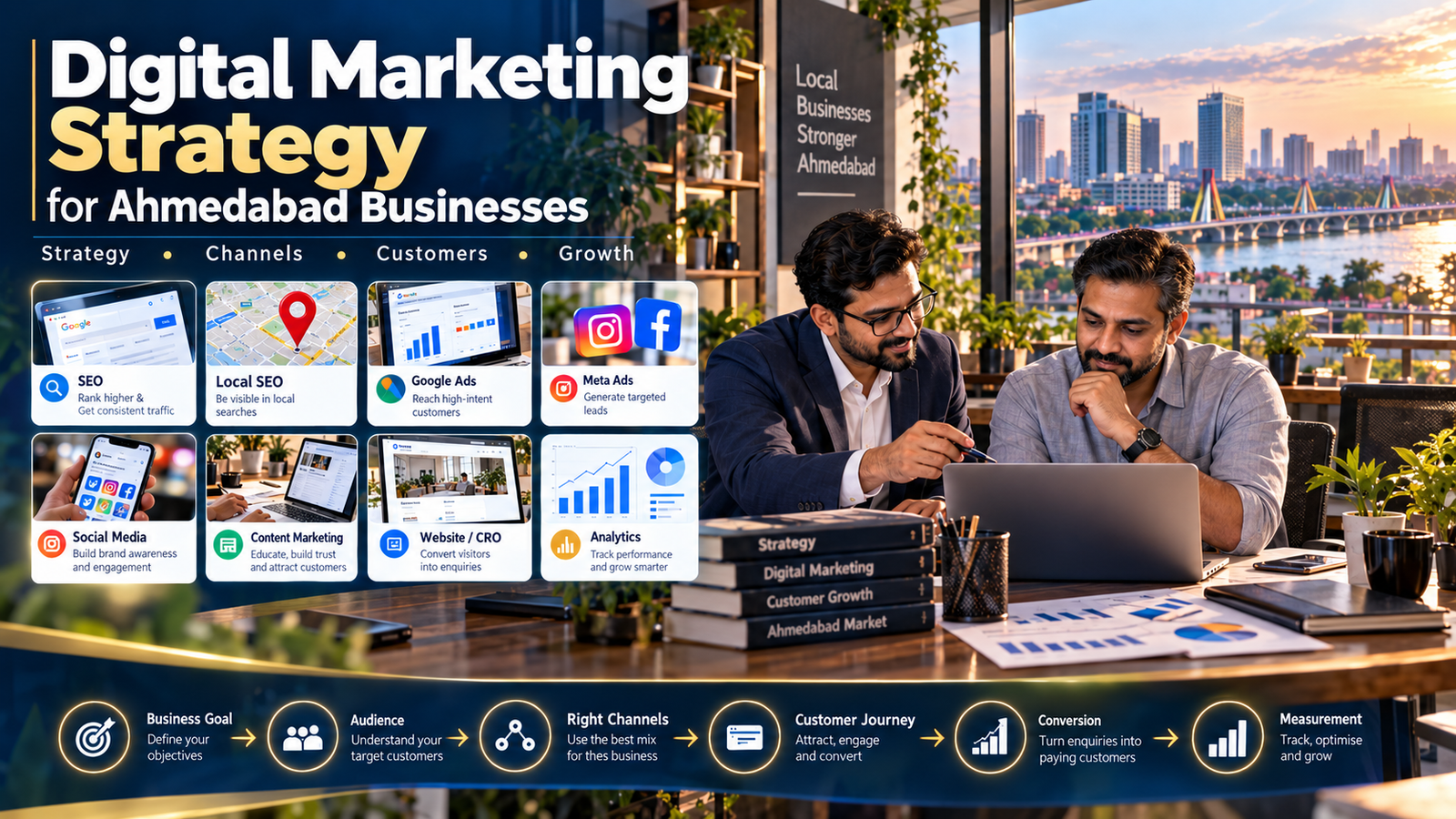
 Digital Marketing Strategy for Ahmedabad Businesses: 10 Proven Strategies
Digital MarketingSeptember 30, 2026
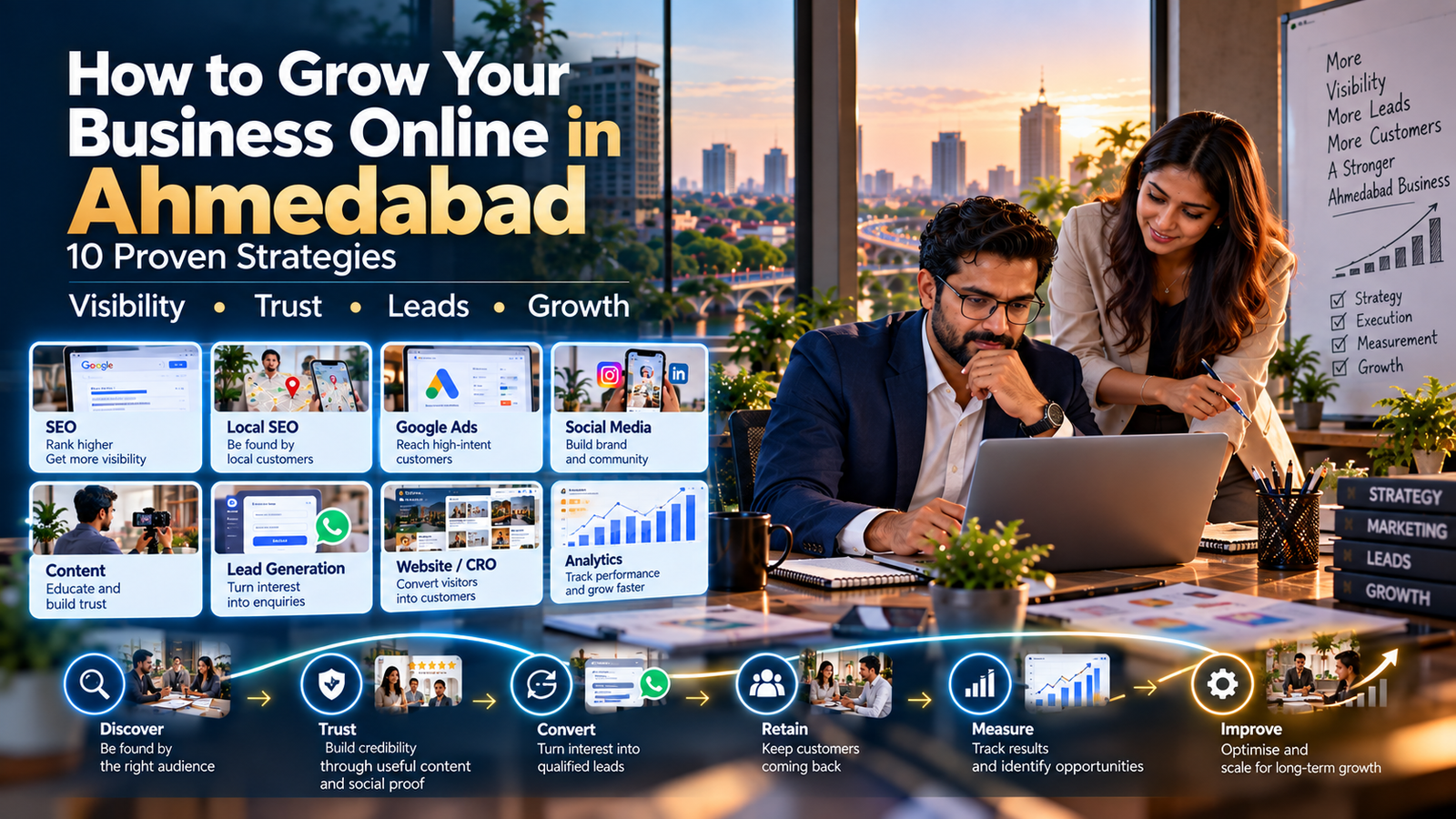
"Growing a business online in Ahmedabad is not about being active on every platform. It is about creating a connected system that brings the right people to your business and helps them take action."
– FT Nexavvy
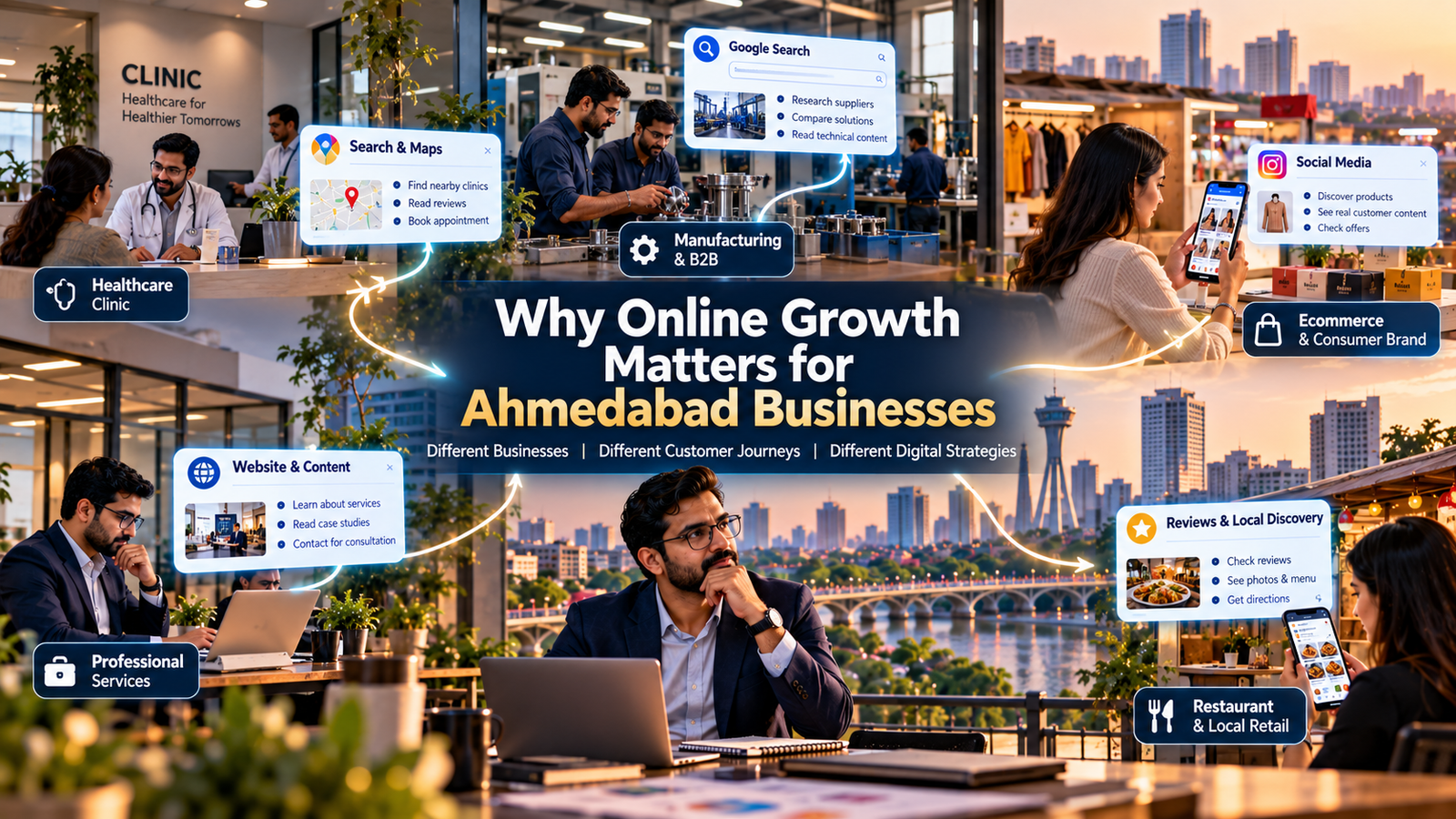
| Metric | What It Shows |
|---|---|
| Website traffic | Online visibility |
| Organic traffic | SEO performance |
| Leads | Demand generation |
| Qualified leads | Lead quality |
| Conversion rate | Website efficiency |
| Cost per lead | Acquisition efficiency |
| CAC | Customer acquisition cost |
| Revenue | Business impact |
| ROI | Overall return |
| ROAS | Paid advertising efficiency |
| Channel | Best For | Main Advantage | Limitation |
|---|---|---|---|
| SEO | Long-term growth | Organic visibility | Takes time |
| Local SEO | Local businesses | Nearby discovery | Geographic focus |
| Google Ads | High-intent demand | Faster visibility | Requires budget |
| Meta Ads | B2C and awareness | Audience targeting | Intent varies |
| Social Media | Brand engagement | Community building | Requires consistency |
| Content Marketing | Education and trust | Builds authority | Takes time |
| Email/WhatsApp | Retention | Direct communication | Requires audience |
| Website CRO | Conversion | More value from traffic | Needs testing |

Being everywhere can spread your budget and attention too thin. Start with channels that match customer behaviour.
Traffic is useful only when it supports business outcomes.
Local businesses can lose valuable demand by neglecting Google Maps and local search.
Without tracking, you cannot know whether advertising creates customers.
Specific campaigns need relevant landing pages.
Useful, audience-focused content is more valuable than content created only for keywords.
Reviews influence trust and local customer decisions.
A good enquiry can be lost if the response comes too late.
Followers are not the same as customers.
Before increasing spending, understand your conversion rate and customer acquisition cost.
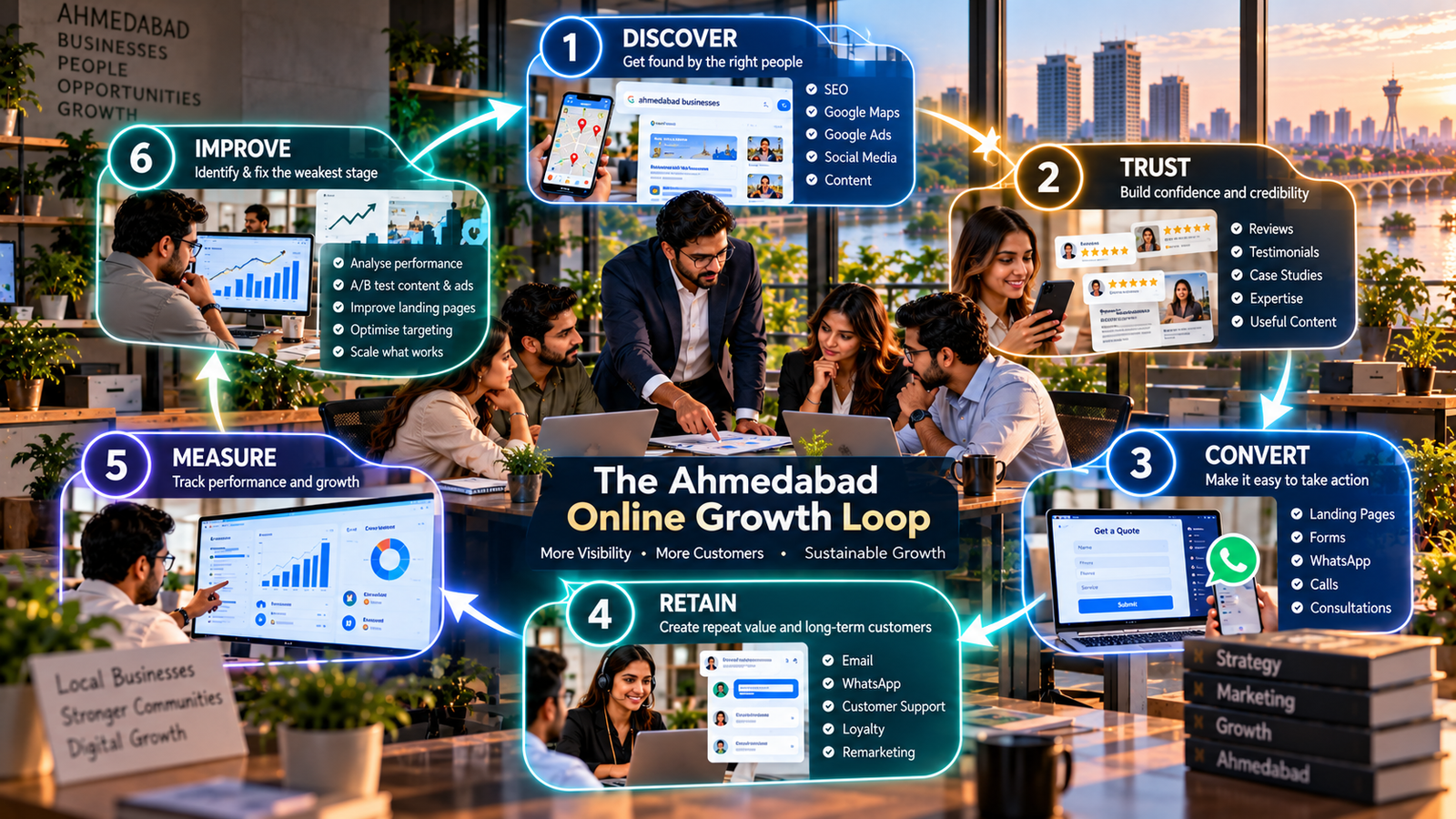
Get found through: SEO, Google Maps, Google Ads, Social media, Content.
Build confidence through: Reviews, Testimonials, Case studies, Expertise, Useful content.
Make action easy through: Landing pages, Forms, WhatsApp, Calls, Consultations.
Create repeat value through: Email, WhatsApp, Customer support, Loyalty, Remarketing.
Track: Leads, Conversion, CAC, Revenue, ROI.
Find the weakest stage and improve it.
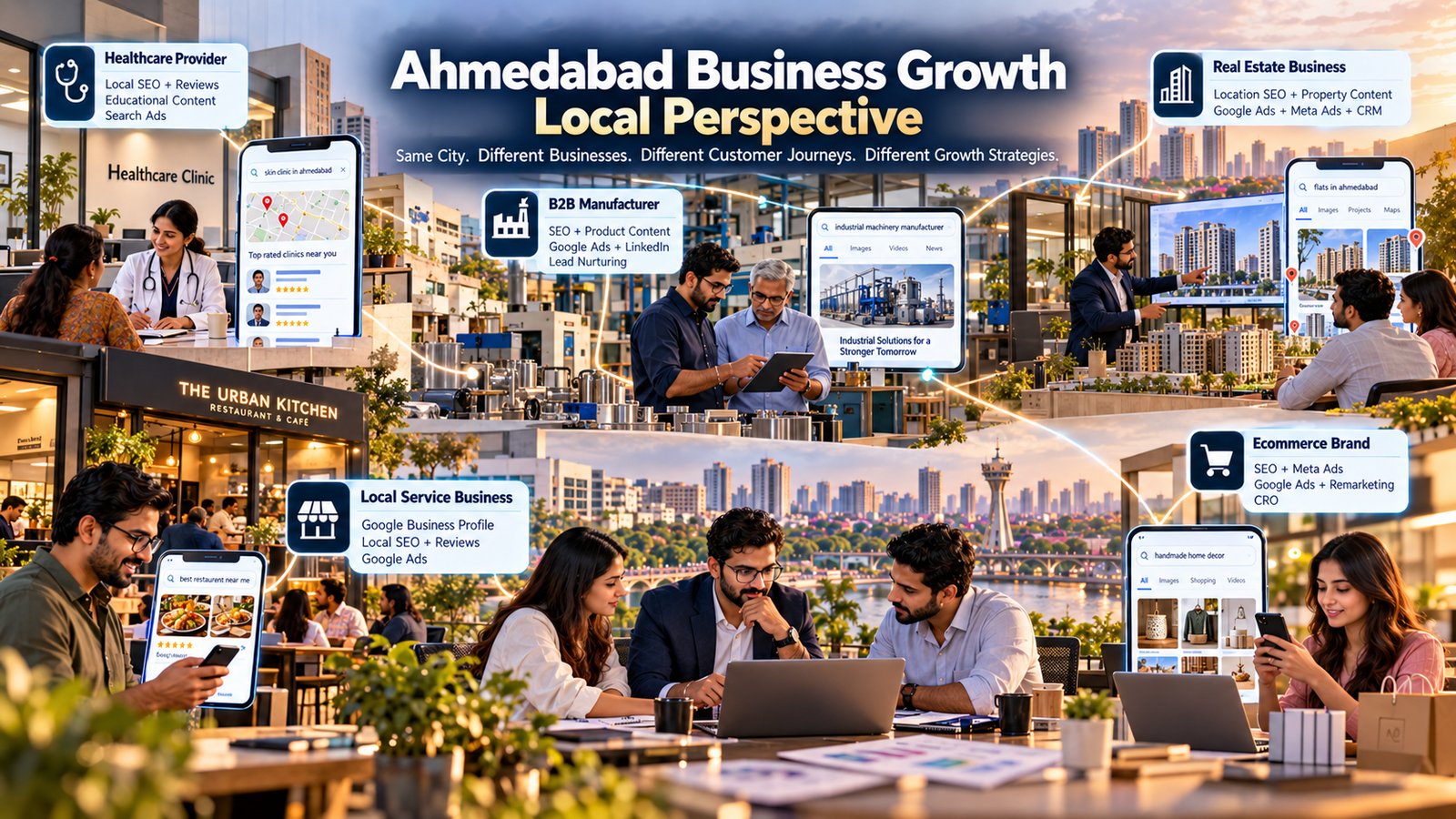
Focus on: Google Business Profile + Local SEO + Reviews + Google Ads
Focus on: SEO + Product Content + Google Ads + LinkedIn + Lead Nurturing
Focus on: SEO + Meta Ads + Google Ads + Remarketing + CRO
Focus on: Local SEO + Reviews + Educational Content + Search Ads
Focus on: Location SEO + Property Content + Google Ads + Meta Ads + CRM
Start with a professional website, SEO, Local SEO where relevant, useful content and targeted advertising. Then track leads, conversions and revenue to identify the channels that produce the best results.
There is no universal strategy. Local businesses may benefit from Local SEO, while B2B companies may need SEO, content and LinkedIn. Ecommerce businesses often need SEO, Google Ads, Meta Ads and remarketing.
Yes. SEO can help small businesses build organic visibility and attract customers searching for relevant products and services.
It is particularly valuable for businesses that depend on local customers because it supports visibility in Google Search and Maps.
Google Ads can provide faster visibility for high-intent searches, while SEO can build long-term organic traffic. Many businesses benefit from combining both.
Improve search visibility, create useful content, run targeted advertising, optimise your website and make it easy for visitors to contact you.
Local SEO improves a business's visibility for searches connected to its geographic service area.
Social media can increase brand awareness, engagement, product discovery, trust and remarketing opportunities.
Create content that answers customer questions, solves problems, explains products and services, compares options and demonstrates expertise.
Use clear CTAs, contact forms, WhatsApp, phone calls, consultation forms, quote requests and relevant landing pages.
Conversion rate optimization improves a website or landing page so more visitors complete a valuable action.
There is no fixed amount. The budget depends on competition, customer value, margins, growth goals and expected acquisition cost.
SEO timelines vary based on competition, website authority, technical condition, content quality and search demand. It should generally be viewed as a long-term investment.
Track qualified leads, conversion rate, cost per lead, customer acquisition cost, revenue, ROI and channel performance.
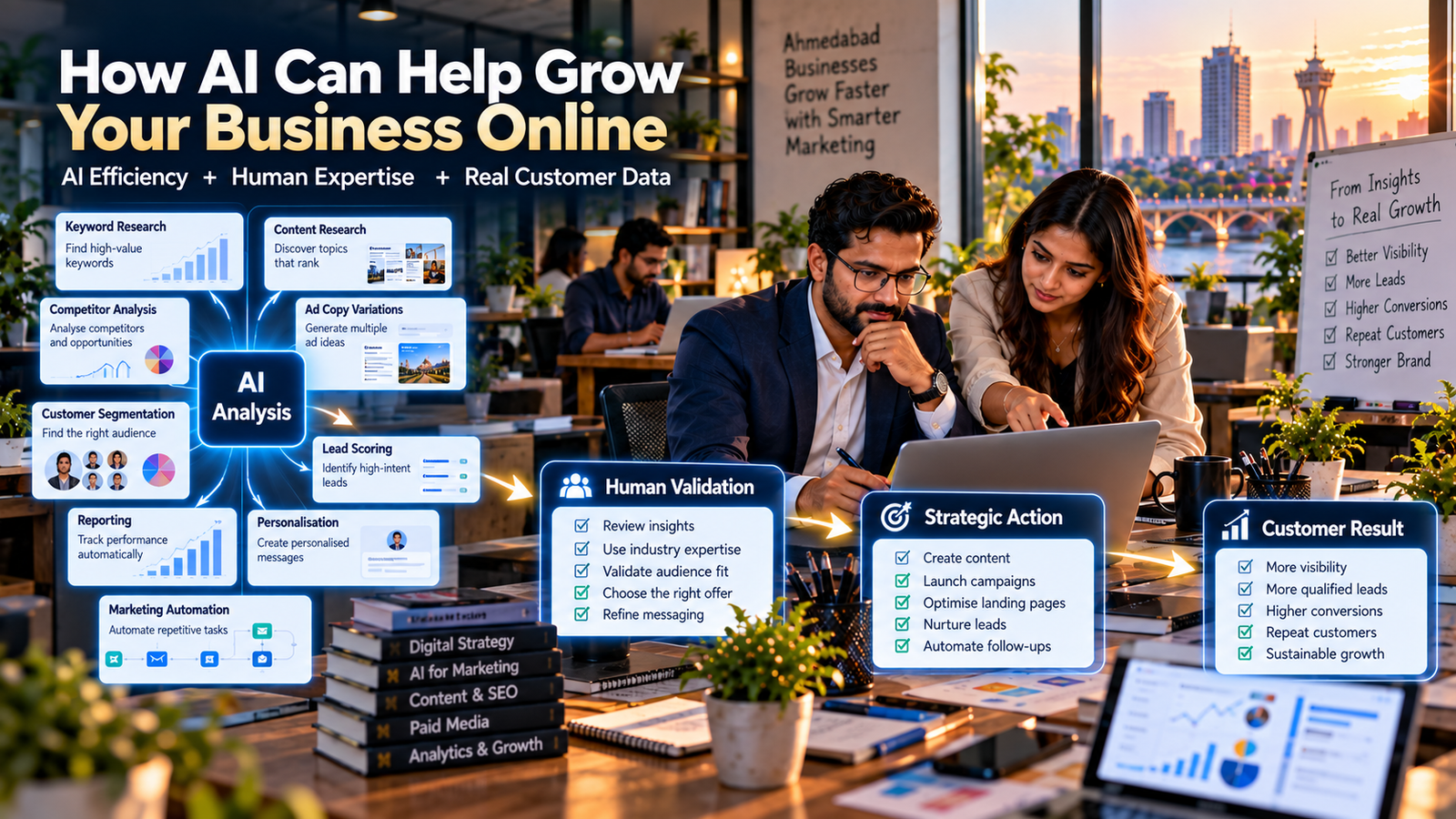
Yes. AI can assist with research, content workflows, customer segmentation, reporting, automation and analysis. Human expertise should still guide strategy and quality.
Author

FT Nexavvy
FT Nexavvy editorial team.


ON THIS PAGE
Digital Marketing Strategy for Ahmedabad Businesses: 10 Proven Strategies Online Lead Generation for Ahmedabad Businesses: 10 Proven Strategies
 How Local SEO Helps Ahmedabad Businesses Grow: 10 Proven Benefits
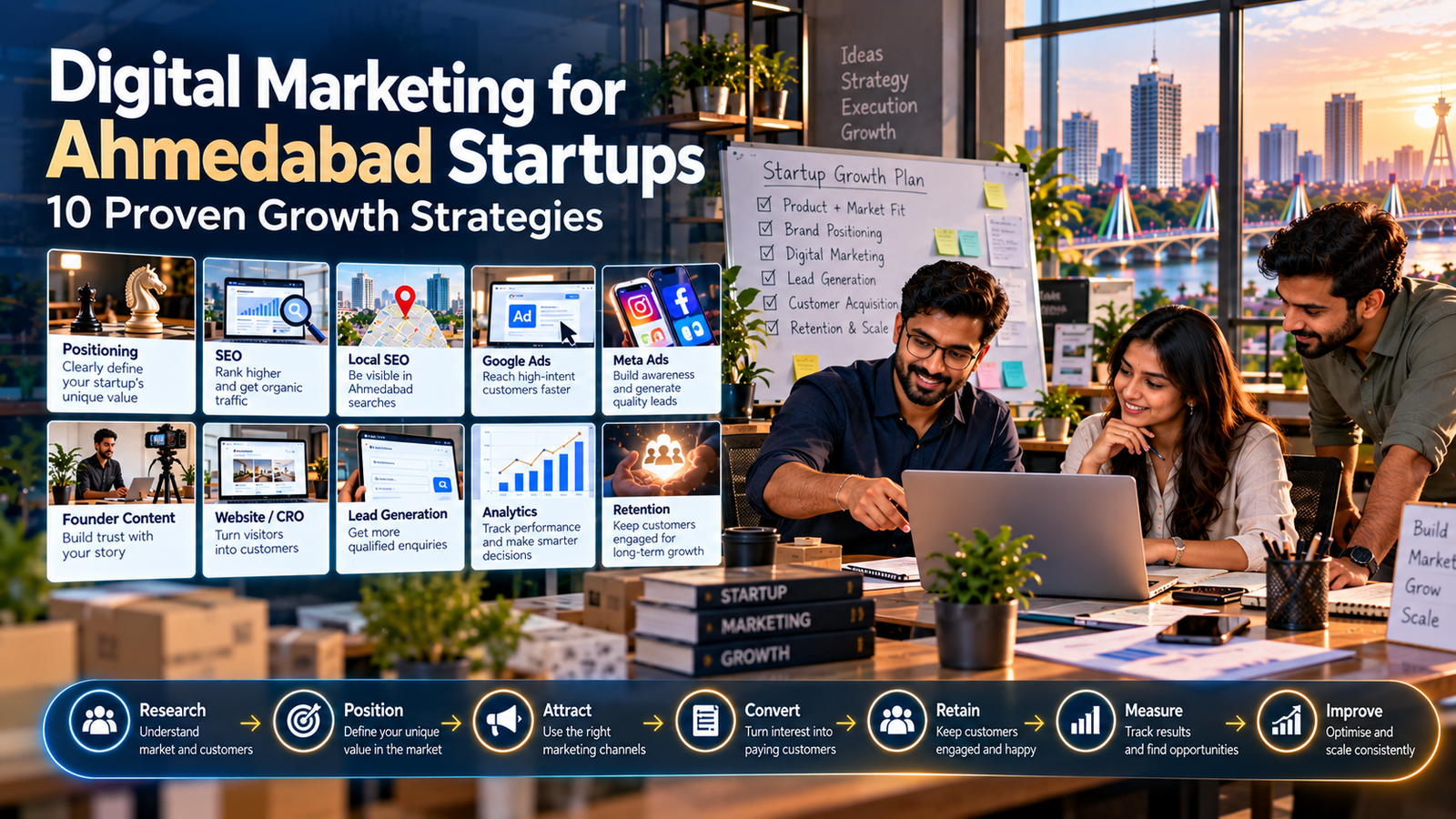 Digital Marketing for Ahmedabad Startups: 10 Proven Growth Strategies
Have a Project?
Let’s talk!

NDA? Absolutely just ask.
We’ll respond in 24 hours fast & focused.
Work with senior UX experts, not juniors.
Schedule a call:
Mr Panchal
Founder & CEO
How can we help you?
Prefer email?
hello@ftnexavvy.com

DIGITAL MARKETING AGENCY IN AHMEDABAD

Working Hours
Monday – Saturday 9:00 am – 6:00 pm ( Sunday > Closed )
Services
Use Cases
Travel
Health & Fitness
Educations
News App
Food Order & Delivery App
Work inquiries
Interested in working with us?
hello@ftnexavvy.com
Call : +91 90303 48383
Ahmedabad Office:
A-531, Money Plant High Street,
Gota, Ahmedabad - 382470
Looking for a job opportunity?
See open positions
Sign up for the newsletter










Disclaimer
© 2025-2026 Nexavvy. All rights reserved.
